









"Behold ‘The days are coming,’ declares the Lord, ‘when I will fulfill the promise I made to the house of Israel and the house Judah.
In those days and at that time I will cause a righteous Branch spring up for David, and he shall execute justice and righteousness in the land.
In those days Judah will be saved, and Jerusalem will dwell securely. This is the name by which it will be called: ‘The Lord Our Righteous Savior.’
- Jeremiah 33:14-16
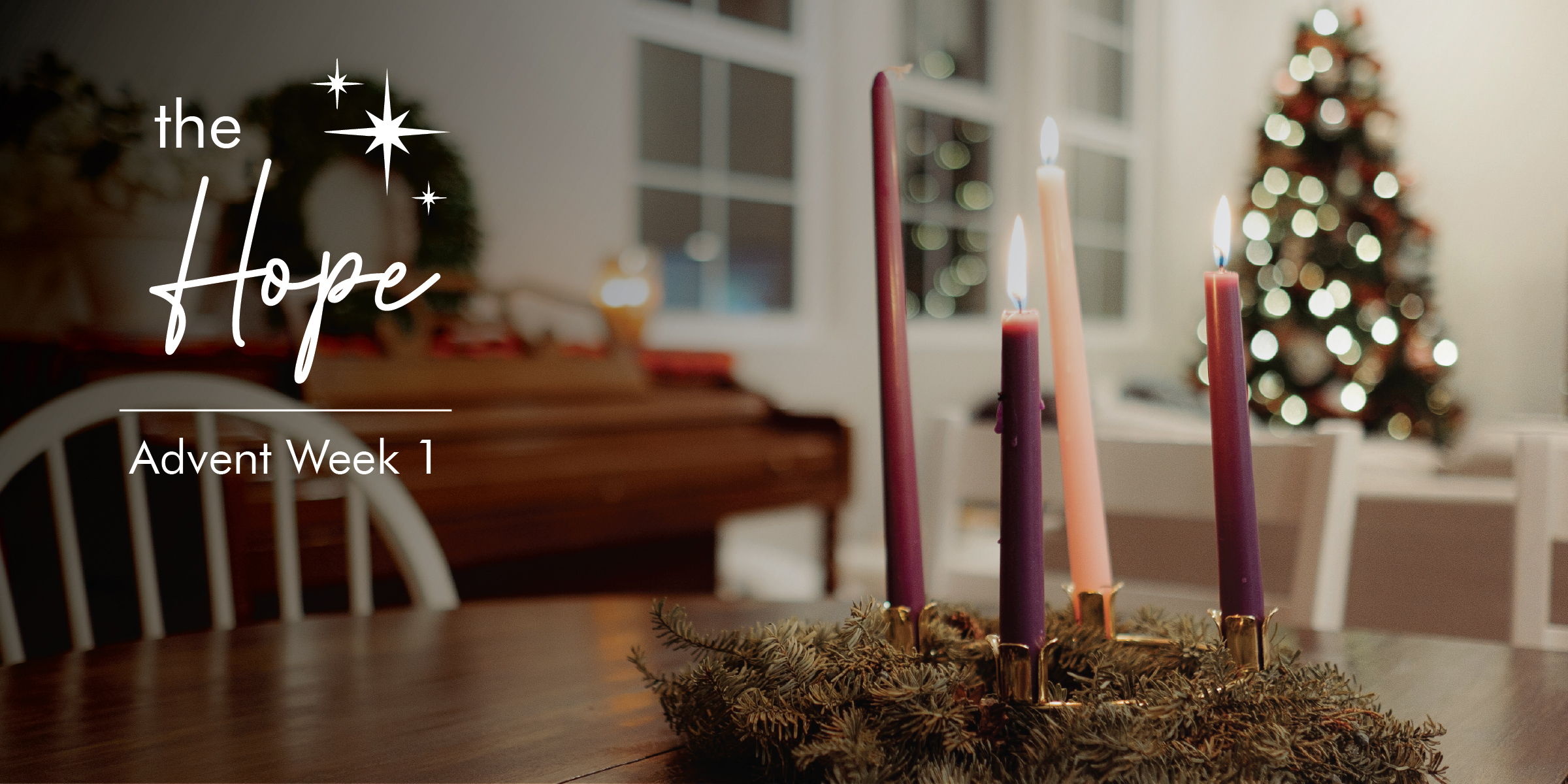
The Hope - Advent week 1
“I believe in the sun, though it be dark; I believe in God, though He be silent; I believe in neighborly love, though it be unable to reveal itself.”
These words were reportedly found scratched on a wall in an underground in an underground passage beneath the city of Cologne, Germany during the second World War. The passage was used in the Catholic resistance as refuge from the Gestapo. It has been beautifully set to music by Kim Andre Arnesen (see video below) as an anthem of hope in the midst of the darkest days. While the words have been slightly changed by time and circumstance, the sentiment that comes through clearly across the decades is that there is always a glimmer of light in the darkness.
For so many of us, the kinds of horrors that people endured during WW2 are unthinkable. But just because we do not endure the same kind of hardship does not mean that we don’t endure the same temptation toward hopelessness. In fact, the temptation to lose hope is as old as time, from Adam and Eve to those going through trials in Revelation. Scripture is full of examples, but is also full of the remedy.
During the season of Advent, we participate in the “waiting in hope” that our forebears experienced. The people of Israel, wading through a history of their own lack of faith and the discipline and consequence that entailed, were prone to loss of hope. It is in the darkest moments of their history that they receive word from the Lord through the prophets that God’s promises are greater than the lack of hope they exhibit. No matter how bleak things may seem, they hear, God will not fail, and because of the faithfulness of God, they can have hope.
The people of God in scripture and in history have hope not because they are unreasoning optimists but because they understand and trust in the character of God. They believe that the promises of God will be fulfilled in God’s timing, and they acknowledge that while the ways of God are higher than our ways, God will always be faithful to His word.
The people of Israel were waiting for the promise of God to be fulfilled, and they waited with a hope based on God’s promise and character. The answer to that hope, its realization, was Jesus Christ. Jesus was the perfect embodiment of God’s promise and gave a weary and hopeful people the answer they’d been waiting for.
And not much has changed.
Ever since the death, resurrection, and ascension of Jesus, the church (God’s people) has been waiting in the same way. Advent is the reminder for us that we join the people of God across time and geography in awaiting the promised return of Jesus and the reconciliation of all things.
Our waiting is built on the same trust in the character of God that our ancestors exhibited. Jesus told us that he would return, and that in the end, his return would mark the consummation of God making all things right. The hope that we hold now as Christians is the hope that God will do what God has said He will do, and it is built on our understanding of who God is. We hope for these things even though sometimes we don’t see it happening in front of us. We hope for God to make all things new even though some things seem to be getting older. We hope for Jesus to reconcile all things to God even though it seems like there are so many things and people turning away. We hope for the returning of Jesus even when he feels far away. And we hold all of that hope because we believe that Jesus is who he says he is, and that God is who He says he is.
We hope because we believe.